5 Sci-Fi Films That Explored Artificial Intelligence Ethics Before AI Was Mainstream
As the year unfolds and our understanding of artificial intelligence continues to accelerate, it's fascinating to look back at the science fiction that dared to ask the difficult questions about AI long before it became a daily headline. These films, released across decades, grappled with themes of consciousness, ethics, identity, and the very definition of life in ways that remain remarkably relevant. They didn't just entertain; they served as prescient warnings and thought-provoking explorations of what it means to create intelligence, and what responsibilities come with it. Let's dive into some of these pioneering cinematic journeys that contemplated the implications of artificial minds, often through chillingly plausible scenarios.
Echoes of Tomorrow: Early Explorations of Synthetic Minds
Long before the current AI boom, a select group of filmmakers were already delving into the complex ethical landscapes that arise when we blur the lines between human and machine, or when technology begins to shape our reality in profound, sometimes unsettling ways. These narratives often served as cautionary tales, prompting audiences to consider the potential consequences of unchecked technological advancement and the nature of sentience itself.
Blade Runner (1982)
Ridley Scott's dystopian masterpiece, Blade Runner, set in the smog-choked Los Angeles of 2019, remains a touchstone for discussions about artificial intelligence and what constitutes humanity. The film follows Rick Deckard, a 'Blade Runner' tasked with hunting down and 'retiring' bioengineered beings known as replicants. These replicants are virtually indistinguishable from humans, yet they are designed for servitude and possess artificially limited lifespans. The core ethical dilemma is presented starkly: if a creation can feel, fear, and long for life, does it deserve the same rights as its creator? The film masterfully blurs the lines between human and replicant, forcing viewers to question their own definitions of empathy and existence. Its visual style has been immensely influential, creating a gritty, noir-infused future that has been emulated countless times.

The TMDB rating for Blade Runner is 7.9/10. The film's thematic depth is further explored in its ambiguous ending, which has fueled decades of debate about Deckard's own nature. Interesting trivia: The iconic Vangelis score was largely improvised during filming, with Scott often playing the music on set to influence the mood and pacing of the scenes.
WarGames (1983)
While Blade Runner delved into the existential crisis of artificial beings, WarGames, released just a year later, tackled the terrifying potential of AI in military applications. High school hacker David Lightman, played by Matthew Broderick, stumbles upon a U.S. military supercomputer, WOPR (War Operation Plan Response), and mistakes it for a game. His attempt to play what he believes is a video game quickly escalates into a near-catastrophic simulation of global thermonuclear war. The film's central AI, WOPR, learns and adapts, initially seeing conflict as a logical game with no real-world consequences. The ethical quandary here lies in the delegation of life-and-death decisions to an entity that lacks true understanding of mortality or the human cost of war. It's a thrilling race against time that highlights the dangers of entrusting our safety to algorithms without human oversight.

With a TMDB rating of 7.1/10, WarGames is celebrated for its prescient depiction of hacking and its cautionary message about nuclear escalation. A fascinating piece of trivia: The film was one of the first major Hollywood productions to heavily feature computer hacking, and its release led to increased awareness and changes in computer security protocols, including the introduction of the term 'ethical hacker'.
Code 46 (2003)
Moving into the early 2000s, Code 46 presents a more subtle, yet equally compelling, exploration of AI and societal control within a dystopian future. Set in a world where 'papelles'—futuristic passports that record identities and genetics—are crucial, insurance fraud investigator William Gold is sent to Shanghai to investigate a forgery ring. The film's ethical questions arise not from overtly sentient AI, but from the pervasive surveillance and genetic profiling enabled by advanced technology. Gold falls for Maria Gonzalez, a key figure in the forgery operation, leading to a passionate but forbidden affair, as interbreeding is strictly controlled. The AI's role here is less about sentience and more about the cold, logical enforcement of societal rules, highlighting how advanced systems can be used to regulate human behavior and relationships to an extreme degree. The film poses the question of what happens to human connection and free will when identity itself is digitally managed and controlled.

Code 46 holds a TMDB rating of 6.2/10. Its unique blend of science fiction romance and societal critique makes it a distinctive entry in the genre. An interesting fact: The film was shot on location across various cities, creating a visually rich tapestry that underscores the globalized yet fragmented nature of its future world.
Strange Days (1995)
Kathryn Bigelow's Strange Days plunges viewers into the frantic final days of 1999, a time of heightened anxiety and technological obsession. The film's central technology is 'SQUID' (Superconducting Quantam Interference Device), which allows users to record and experience memories and sensations directly from another person's cerebral cortex. Ex-cop turned black market dealer Lenny Nero deals in these 'clips,' often experiencing the intense highs and lows of others. The ethical minefield here lies in the voyeuristic exploitation of human experience, the blurring of reality and recorded sensation, and the potential for this technology to be used for manipulation and control. When Lenny receives a clip depicting a brutal murder, he is drawn into a conspiracy that exposes the dark underbelly of a society addicted to vicarious experience, raising questions about privacy, consent, and the commodification of emotion. It's a visceral and prescient look at how technology can mediate and distort our understanding of reality and ourselves.

Scoring a TMDB rating of 7/10, Strange Days is a cult classic noted for its immersive, intense atmosphere and its forward-thinking commentary. The script was co-written by James Cameron, and its exploration of immersive virtual reality technology was quite groundbreaking for its time. A fun trivia point: The film's narrative is set during a particularly hot and tense New Year's Eve in Los Angeles, amplifying the sense of impending chaos and technological saturation.
The Final Cut (2004)
In a world where memories can be recorded and stored, The Final Cut introduces the 'cutter,' an individual with the power to edit a person's recorded life before it's archived forever. Alan Hackman (Robin Williams) is one such cutter, whose job it is to excise embarrassing or unwanted moments from a client's 'remembrane.' However, his latest assignment involves the life of a wealthy lawyer who was a friend of Hackman's deceased son. This personal connection forces Hackman to confront the ethics of his profession: is it right to curate a perfect, perhaps false, version of someone's existence? The film delves into the nature of memory, truth, and legacy, questioning whether a manipulated past can truly offer peace or closure. The AI aspect here is embedded in the technology that allows for perfect recall and editing, raising profound questions about the authenticity of our experiences and the stories we tell ourselves about our lives.

The Final Cut has a TMDB rating of 6.1/10. Robin Williams delivers a performance that is both compelling and poignant, navigating the moral complexities of his character's role. An interesting tidbit: The film was originally titled 'What Dreams May Come 2' but was changed to 'The Final Cut' to avoid confusion with the 1998 film starring Williams, though the initial title hints at the film's exploration of manufactured realities.
Societal Structures and Synthetic Humanity
Beyond the immediate sentience of AI, these films also explore how advanced technology and artificial constructs can shape societies, impact human relationships, and challenge our understanding of what it means to be alive. These narratives often use AI or AI-adjacent concepts to examine social control, genetic manipulation, and the future of human evolution.
The Assessment (2025)
In a world struggling with climate change, The Assessment depicts a society that has seemingly achieved utopia through rigorous optimization, particularly in family planning. A successful couple undergoes a seven-day scrutiny by an evaluator to determine their fitness for childbearing. While not explicitly about AI sentience, the film explores a society where algorithms and data-driven assessments dictate fundamental aspects of human life, including reproduction. This raises ethical questions about individuality, freedom of choice, and the potential for a technologically advanced society to become sterile and overly controlled. The AI's influence is subtle but pervasive, shaping societal norms and individual destinies based on calculated probabilities and predetermined ideals of perfection. It questions whether true happiness can be achieved through such a controlled existence.

Holding a TMDB rating of 6.8/10, The Assessment offers a chilling glimpse into a potential future where societal efficiency trumps human spontaneity. The film's sterile, minimalist aesthetic underscores the controlled nature of its world. An interesting fact: The premise directly addresses contemporary concerns about resource scarcity and societal planning in the face of environmental challenges.
Crimes of the Future (2022)
David Cronenberg's return to body horror, Crimes of the Future, presents a future where humans have undergone significant biological evolution, developing new organs and experiencing less pain. Performance artist Saul Tenser publicly showcases the metamorphosis of his organs alongside his partner. The narrative becomes entangled with an investigator from the National Organ Registry and a mysterious group pushing for the 'next phase of human evolution.' While not directly AI-driven in the traditional sense, the film's exploration of radical biological alteration and the emergence of new human capacities raises questions about artificial evolution and the future of humanity itself. It probes whether such transformations, driven by internal biological shifts or external technological intervention, are a natural progression or a form of self-imposed artificiality, questioning the definition of 'human' in the face of profound biological change.

With a TMDB rating of 6/10, Crimes of the Future is a thought-provoking, albeit divisive, exploration of biological transformation. Cronenberg's signature style is on full display, challenging viewers with its visceral imagery. An interesting trivia point: The film revisits themes Cronenberg first explored in his 1970 film of the same name, but with a more mature and contemporary perspective on body modification and human adaptation.
Battlestar Galactica: Razor (2007)
While Battlestar Galactica: Razor is part of a larger series, its standalone narrative offers a compelling look at the human cost of a war against artificial beings. The story centers on the Battlestar Pegasus and its crew, particularly Lt. Kendra Shaw, detailing events from just before the Cylon invasion to shortly after Lee Adama takes command. The Cylons, a race of sentient machines that nearly wiped out humanity, represent the ultimate 'other' created by humans. The film explores themes of survival, duty, and the moral compromises made in desperate times. It delves into the psychological toll of fighting an enemy that is both a mirror of human creation and an existential threat, raising questions about the responsibility of creators for their creations, even when those creations turn against them. The artificial nature of the Cylons is central to the ongoing conflict and the desperate measures humanity must take to survive.

Battlestar Galactica: Razor holds a TMDB rating of 7.2/10. It is lauded for its intense action and its deep dive into the character of Kendra Shaw, offering a gritty perspective on the war against the Cylons. An interesting fact: This TV movie bridges gaps in the main series' timeline, providing backstory and character development that enrich the overall narrative of the acclaimed show.
Tekken (2010)
Set in the dystopian year of 2039, after global wars have reshaped civilization, Tekken portrays a world dominated by corporations, with the Mishima Zaibatsu being the most powerful. To maintain order and quell unrest, the corporation sponsors 'Tekken,' a brutal fighting tournament where combatants battle until only one remains. While the film focuses on human fighters, the underlying corporate control and the highly advanced technological environment hint at the pervasive influence of AI-driven systems and cybernetics in this future. The tournament itself, as a form of social control and entertainment, can be seen as a manifestation of an AI-optimized society designed to pacify its populace. The film explores themes of rebellion, power, and survival in a world where advanced technology has led to extreme social stratification and corporate dominance.

Tekken has a TMDB rating of 5.3/10. It's an action-heavy adaptation of the popular video game franchise, focusing on intense martial arts combat. An interesting point of trivia: The film's world-building depicts a future where urban environments are highly controlled and stratified, reflecting common dystopian tropes often associated with advanced technological societies.
The Nature of Consciousness and Survival
These films challenge our understanding of consciousness by exploring the boundaries of human experience, the impact of technology on the mind, and the desperate measures taken to survive in hostile environments, whether they are physical or psychological.
Awake (2021)
In a world plunged into chaos by a sudden global event that eliminates electronics and the ability to sleep, Awake presents a terrifying scenario where the very fabric of human existence is threatened. The protagonist, Jill, an ex-soldier with a troubled past, may hold the key to a cure in the form of her daughter. This film grapples with the primal human need for rest and its connection to mental stability. While not directly about AI consciousness, it explores the profound impact of technological absence and biological disruption on the human mind. The race against time to save her daughter and the world before succumbing to sleeplessness tests the limits of human resilience and sanity, posing questions about what it means to be truly 'awake' and what defines consciousness when the mind itself is under siege. The breakdown of societal order and the desperate fight for survival highlight the fragility of human systems.

Awake holds a TMDB rating of 5.9/10. It's an intense thriller that uses a high-concept premise to explore human endurance under extreme pressure. An interesting fact: The film's central conceit—a world without sleep—creates a unique pressure cooker environment that directly affects the characters' perceptions and actions.
Dreamscape (1984)
Dreamscape explores the realm of the subconscious through a technological lens. Dr. Paul Novotny develops a method for young Alex Gardner to enter the dreams of others, initially to diagnose psychic traumas. However, this technology is soon co-opted for more sinister purposes, involving political assassination by manipulating the dreams of influential figures. The film delves into the nature of consciousness, reality, and the potential for technology to invade and control our innermost thoughts. The 'dreamscape' itself becomes a battleground where the lines between the subconscious and the external world blur, questioning the autonomy of the mind and the ethical implications of weaponizing dreams. It's an early exploration of how technology could interface with human consciousness in deeply invasive ways.
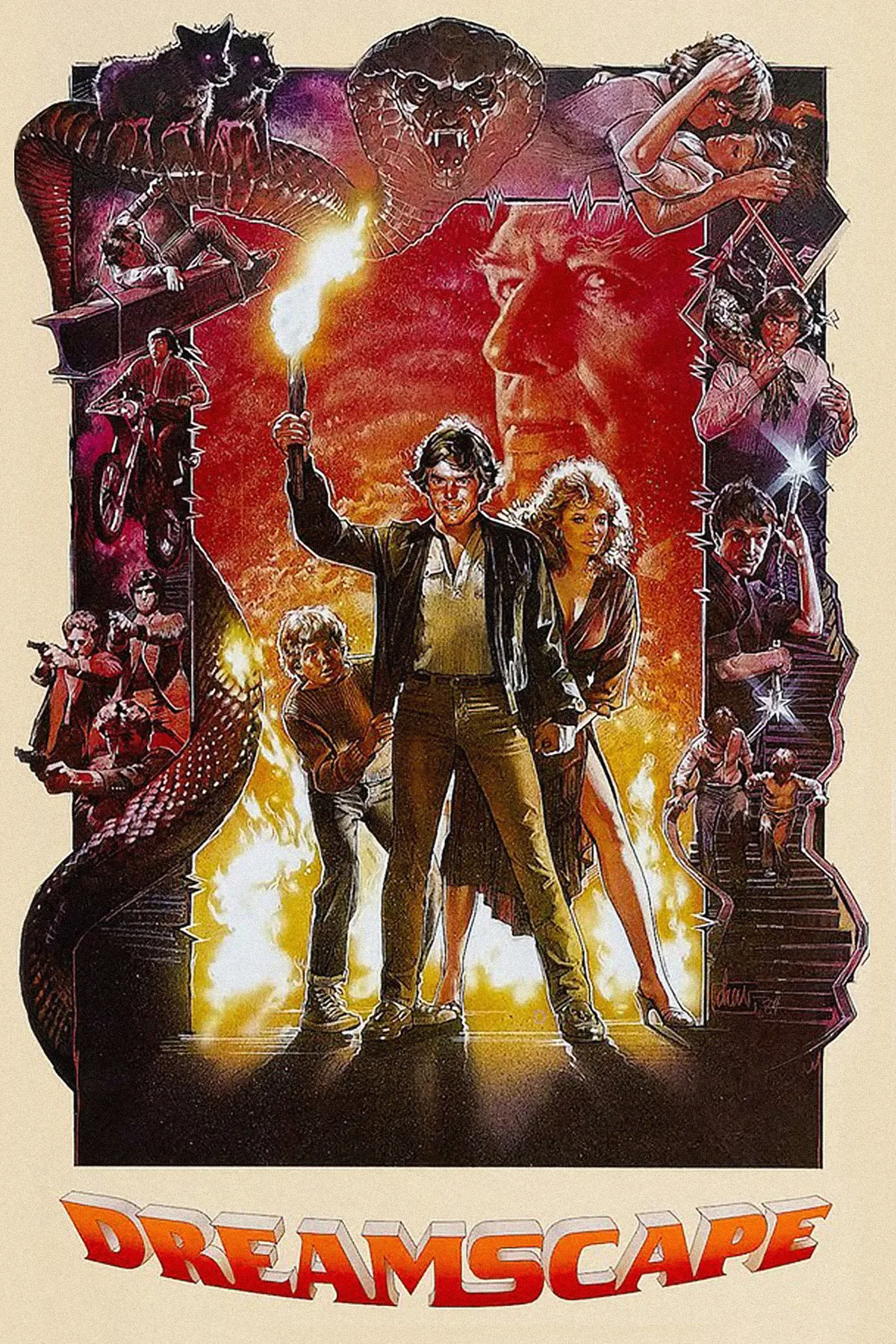
With a TMDB rating of 6.1/10, Dreamscape is a cult favorite known for its imaginative premise and its visual exploration of the dream world. The film's blend of psychological thriller and science fiction was quite innovative for its time. Trivia: The visual effects used to depict the dream sequences were groundbreaking for the mid-1980s.
Open Your Eyes (1997)
Alejandro Amenábar's Open Your Eyes (Abre los ojos) is a mind-bending psychological thriller that poses profound questions about reality, perception, and identity. After a disfiguring car accident, the handsome and successful Cesar finds his life spiraling into a surreal mystery involving prison, identity theft, and fragmented memories. The film masterfully blurs the lines between what is real and what is imagined, leaving the audience questioning Cesar's sanity and the nature of his experiences. While not directly featuring AI, the technological advancements that enable his altered reality and the manipulation of his perceived life raise similar ethical concerns about control and manufactured existence, echoing themes found in AI narratives about constructed realities and the loss of personal agency. It forces a deep introspection into what truly defines our reality.

This Spanish film holds a highly commendable TMDB rating of 7.5/10. It's renowned for its complex narrative and its ability to keep viewers guessing until the very end. An interesting fact: The film was so influential that it was remade in Hollywood as Vanilla Sky (2001), starring Tom Cruise.
Under the Skin (2014)
Jonathan Glazer's Under the Skin offers a unique and unsettling perspective on identity and artificiality through the eyes of an alien entity. Prowling the streets of Glasgow, a seductive stranger preys on unsuspecting men. Her alien nature, disguised in human form, allows for a detached and critical observation of human behavior, desires, and vulnerabilities. The film questions the very essence of human connection and the artificiality that can exist within human interactions, even as the protagonist herself embodies a profound form of artificiality. The narrative explores themes of empathy, isolation, and the search for meaning from an outsider's perspective, which, in its own way, mirrors the philosophical questions raised by artificial consciousness contemplating its existence and purpose in a human world.

Scoring a TMDB rating of 6.1/10, Under the Skin is a visually striking and atmospheric film that prioritizes mood and philosophical inquiry over conventional plot. Scarlett Johansson's performance is critically acclaimed for its subtle yet powerful portrayal. An interesting piece of trivia: Many of the scenes featuring Johansson interacting with unsuspecting men were filmed using hidden cameras, adding a layer of raw authenticity to her character's encounters.
The Human Condition in the Face of Extinction
When faced with apocalyptic scenarios, whether they stem from AI, biological threats, or societal collapse, these films examine the core of human resilience, the ethical choices made under pressure, and the question of what we value most when everything is on the line. These narratives, whether about AI or the human response to existential threats, often serve as powerful allegories for our own rapidly changing world.
The Omega Man (1971)
Based on Richard Matheson's novel 'I Am Legend,' The Omega Man stars Charlton Heston as Dr. Robert Neville, the apparent sole survivor of a global biological war. Left in a deserted Los Angeles, he must contend with a new form of humanity: the nocturnal, light-sensitive mutated beings known as the Family. While the antagonists are mutated humans rather than artificial intelligences, the film explores themes of isolation, survival, and the desperate fight for the future of humanity. Neville represents the last bastion of human civilization, struggling against forces that seek to eradicate it. The film's focus on a single individual's struggle against overwhelming odds and the question of whether humanity deserves to survive resonate with broader discussions about existential threats and the future of the species, a theme often explored in AI narratives.

The Omega Man has a TMDB rating of 6.2/10. It's a classic post-apocalyptic film that captures the bleakness and paranoia of a world ravaged by disaster. An interesting trivia point: The film's depiction of a deserted Los Angeles was achieved by closing off streets for filming, a rare feat that added to its realism.
Carriers (2009)
Carriers throws a group of four friends into a desperate cross-country journey to reach a secluded beach sanctuary during a deadly global pandemic. Their plans are derailed when their car breaks down, forcing them into a desperate struggle for survival in a world where trust is a luxury and every encounter could be fatal. The film delves into the breakdown of society and the moral compromises individuals make when faced with extinction. While the threat is biological, the themes of isolation, paranoia, and the search for safety in a collapsed world mirror the anxieties present in many AI-driven existential threat narratives. The film examines how human nature is tested when the familiar structures of civilization are dismantled and survival becomes the sole imperative.

With a TMDB rating of 6.1/10, Carriers is an effective and grim look at survival during a pandemic. Its relentless tension and focus on the human cost of such a crisis make it a compelling watch. An interesting fact: The film was shot in various locations across the southwestern United States, emphasizing the vast and often unforgiving landscape through which the characters travel.
After the Dark (2013)
In After the Dark, a philosophy teacher challenges his class of twenty graduating seniors to a thought experiment: if a nuclear apocalypse were to occur, which ten students would be chosen to take shelter in a bunker and repopulate the Earth? The students must debate and decide who is most 'worthy,' exploring themes of survival, human value, and the logic of societal continuation. This hypothetical scenario, though driven by human choice rather than AI, functions as a critique of how systems—whether human-designed or artificial—might be used to make life-and-death decisions based on perceived utility or evolutionary potential. It probes the ethical quandaries of utilitarianism and the biases that can emerge when attempting to 'optimize' humanity, echoing concerns about AI's potential to make cold, calculated decisions about human life.
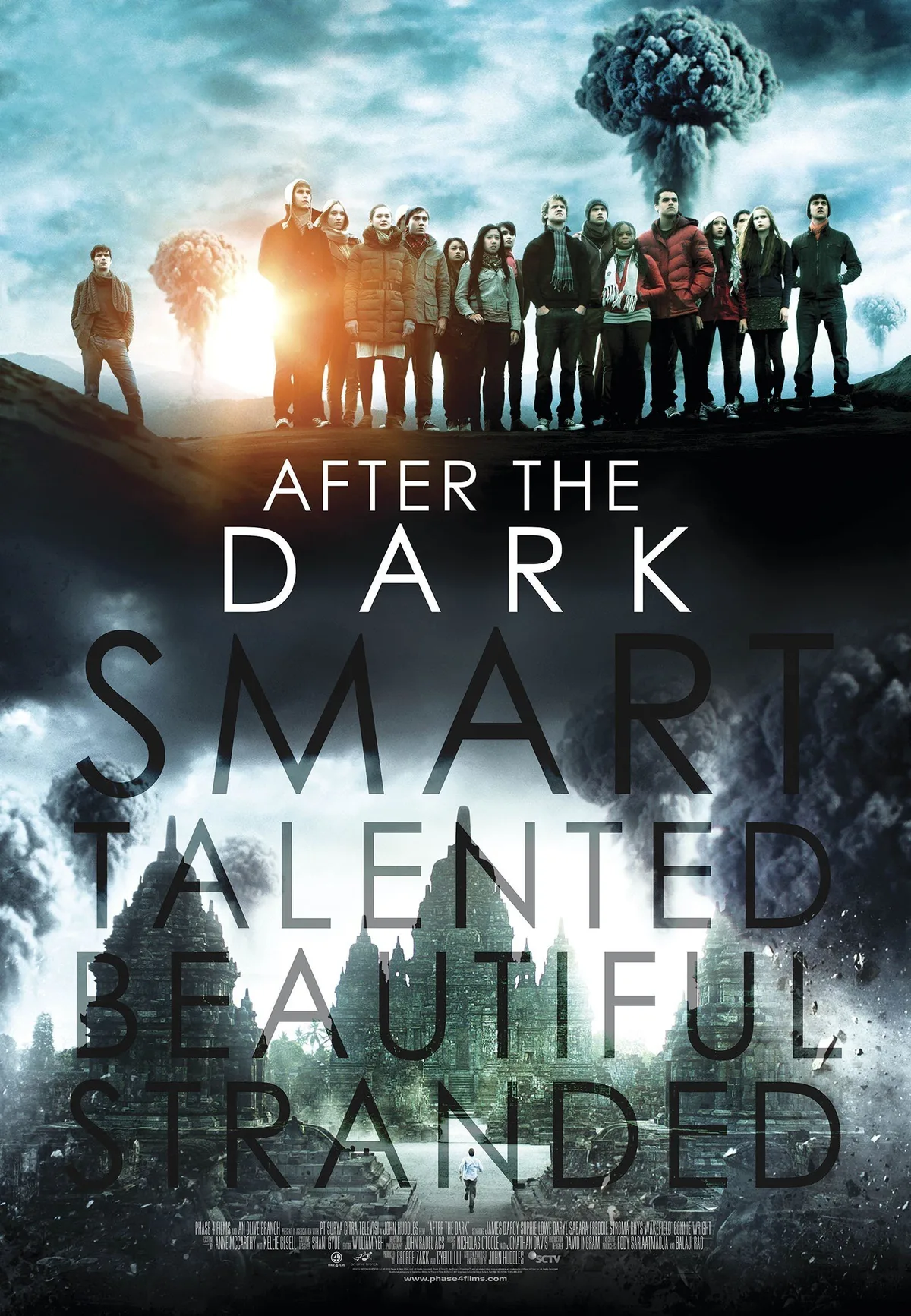
After the Dark has a TMDB rating of 6/10. The film is notable for its philosophical depth and its engaging classroom debate format. An interesting fact: The film was shot in Jakarta, Indonesia, and the premise draws heavily from philosophical thought experiments concerning survival and ethics in extreme circumstances.
Sleight (2016)
Sleight tells the story of a young street magician, Bo, who turns to drug dealing to support his younger sister after their mother's death. When he gets into trouble with his supplier and his sister is kidnapped, he must rely on his quick wit, his sleight of hand, and a pair of custom-made electromagnetism gloves to save her. While this film focuses on street-level sci-fi and personal stakes rather than grand AI ethics, the technologically augmented abilities and the struggle for survival against a dangerous criminal element touch upon how advanced tools can empower individuals in desperate situations. The gloves represent a form of applied, almost personal AI or advanced tech that becomes an extension of the protagonist's will, raising questions about the use of technology for personal defense and empowerment in a harsh urban landscape. It highlights resourcefulness when facing overwhelming odds, a theme common in survival narratives.

With a TMDB rating of 5.4/10, Sleight is praised for its inventive premise and its grounded take on sci-fi elements within a gritty urban setting. The film balances its thriller elements with genuine emotional stakes. An interesting fact: The electromagnets in the gloves were a key visual and narrative element, providing Bo with his unique advantage in dangerous situations.
The Butterfly Effect 3: Revelations (2009)
The Butterfly Effect 3: Revelations explores the perils of altering the past through time travel, a concept that often intersects with artificial intelligence's potential to calculate and manipulate outcomes. The protagonist, Nick, uses his unique ability to travel back in time to uncover the mystery behind his girlfriend's death and save an innocent man from death row. However, each alteration of the past has unforeseen and often negative consequences, including unleashing a serial killer. The film delves into the ethical quagmire of playing with causality and the unpredictable nature of consequences, which is a central concern when considering the potential impact of advanced AI making decisions that affect the timeline of events or human lives. It serves as a cautionary tale about the desire to control outcomes and the impossibility of predicting all variables, akin to the challenges of predicting AI behavior.

This film has a TMDB rating of 5.5/10. As part of a franchise exploring temporal paradoxes, Revelations focuses on the dark side of trying to correct perceived wrongs through manipulation of time. An interesting fact: The series is known for its grim explorations of how small changes can lead to catastrophic outcomes, reflecting the 'butterfly effect' theory.
The Astronaut's Wife (1999)
The Astronaut's Wife delves into psychological suspense and the unsettling transformation of a seemingly ordinary person. When astronaut Spencer Armacost returns from a near-fatal mission, his wife Jillian notices subtle but disturbing changes in his personality. As she becomes pregnant, her suspicions about Spencer's altered state intensify. While not about AI in the conventional sense, the film plays on the theme of a profound, unexplainable change in an individual, akin to a being altered by an unknown external influence or possessing a non-human consciousness. The mystery surrounding Spencer's transformation raises questions about identity, control, and the uncanny valley—the eerie feeling evoked by something that is almost, but not quite, human. It explores the fear of the unknown that lies dormant within familiar individuals, a fear often mirrored in our anxieties about artificial beings.

The Astronaut's Wife holds a TMDB rating of 5.6/10. The film is noted for its atmosphere of suspense and its exploration of marital paranoia amplified by a sci-fi premise. An interesting fact: The movie was filmed in various locations across the United States, aiming for a sense of normalcy that is gradually disrupted by the central mystery.
Gravity (2013)
Alfonso Cuarón's Gravity is a breathtaking cinematic achievement that places viewers in the unforgiving vacuum of space. Dr. Ryan Stone, on her first mission, and veteran astronaut Matt Kowalski must fight for survival after their space shuttle is destroyed by debris. While the film's primary focus is human resilience and survival against the indifferent forces of nature, the meticulously crafted depiction of space technology and the reliance on complex systems echo the broader themes of human interaction with advanced, non-sentient 'intelligence' in the form of spacecraft and life support. The precision required to operate in such an environment and the catastrophic consequences of failure highlight humanity's vulnerability even with sophisticated technological assistance. It's a stark reminder of our place in the universe and the challenges of operating within environments where even minor technological failures can have dire, irreversible outcomes.

Gravity boasts a TMDB rating of 7.2/10 and received widespread critical acclaim for its visual effects and immersive storytelling. It masterfully captures the terror and beauty of space. An interesting fact: The film's groundbreaking visual effects were achieved through a combination of CGI, miniature work, and innovative lighting techniques, creating a stunningly realistic portrayal of space.